
A connection to the landscape

Mountain Retreat. Image by Patrick Reynolds
Where architecture exists in a close conversation with the landscape, materials are chosen not simply for how they look inside a house, but for how they relate to the colours, textures and feel of the environment beyond it.
The Queenstown Lakes landscape is defined by contrasts: blue lakes against schist and scree, pale tussock against dark mountain slopes, and the changing light of an alpine environment.
For architects designing homes in this setting, the relationship between building and landscape is often central to the design. Materials are carefully selected to sit alongside, rather than compete with, the natural environment. Inside these homes, Ambitec polished plaster plays this role. Its colour, texture and variation provide a way to bring the qualities of the landscape into the interior, while working alongside the stone, timber and concrete commonly used in the region.
Mountain Retreat – Lake Wakatipu
Fearon Hay Architects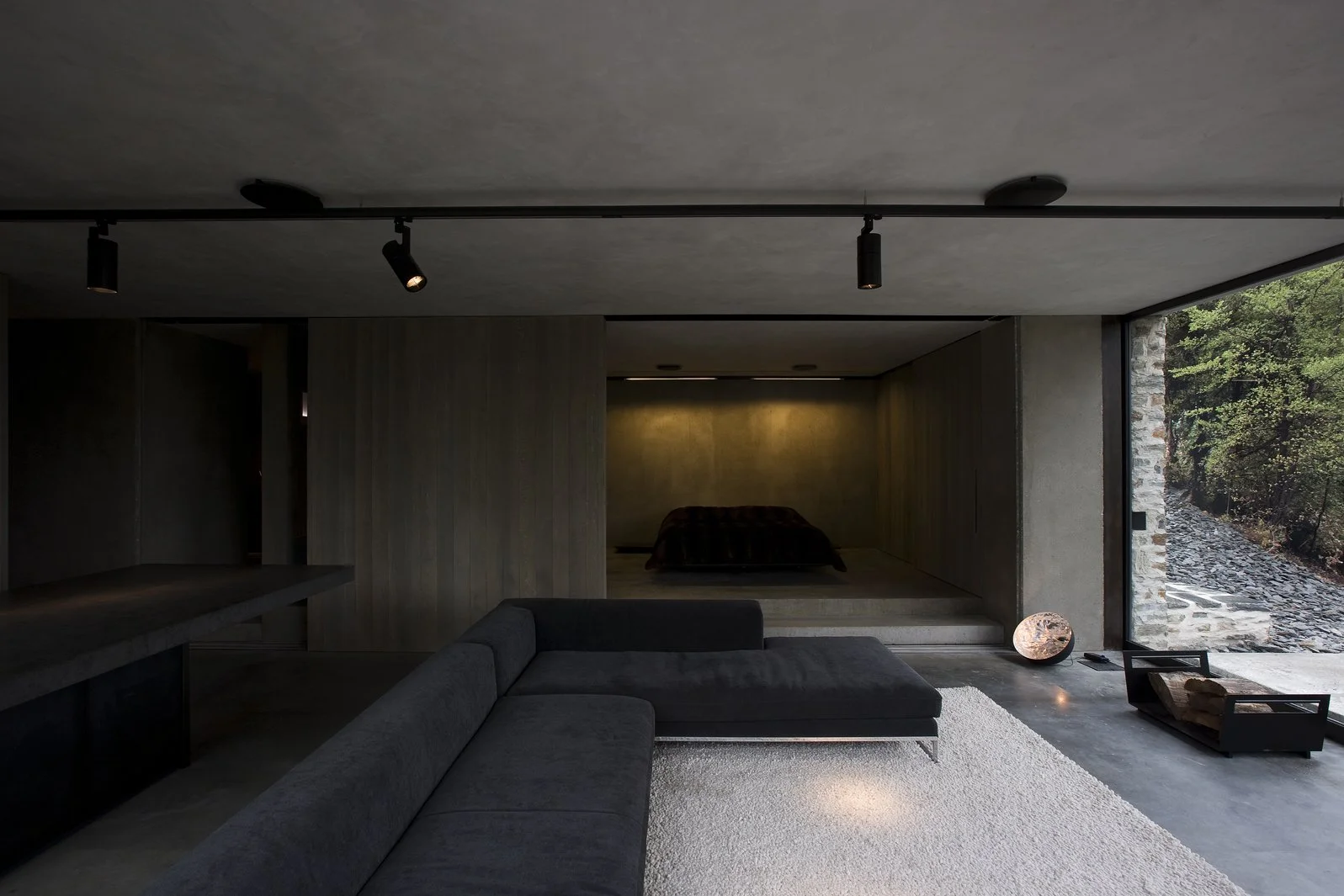
Mountain Retreat - featuring a two-tone Suave poilshed plaster. Image by Patrick Reynolds
Mountain Retreat is a small structure set within a high country station over Lake Wakatipu, Central Otago. The colours and textures of the cladding integrate the building into the gravel tracks, exposed rock faces and scree slopes of the alpine environment.
Reflecting the heavily rendered stone walls, Ambitec Suave polished plaster in a two-tone combination of Tilt Slab Light and Tilt Slab Dark brings a timeless concrete aesthetic to the ceiling. Together with the stacked windows, contributing to the light open space, and connection with the outer environment.
Homestead Bay House – Homestead Bay
Sumich Chaplin Architects and Trinity Interior Design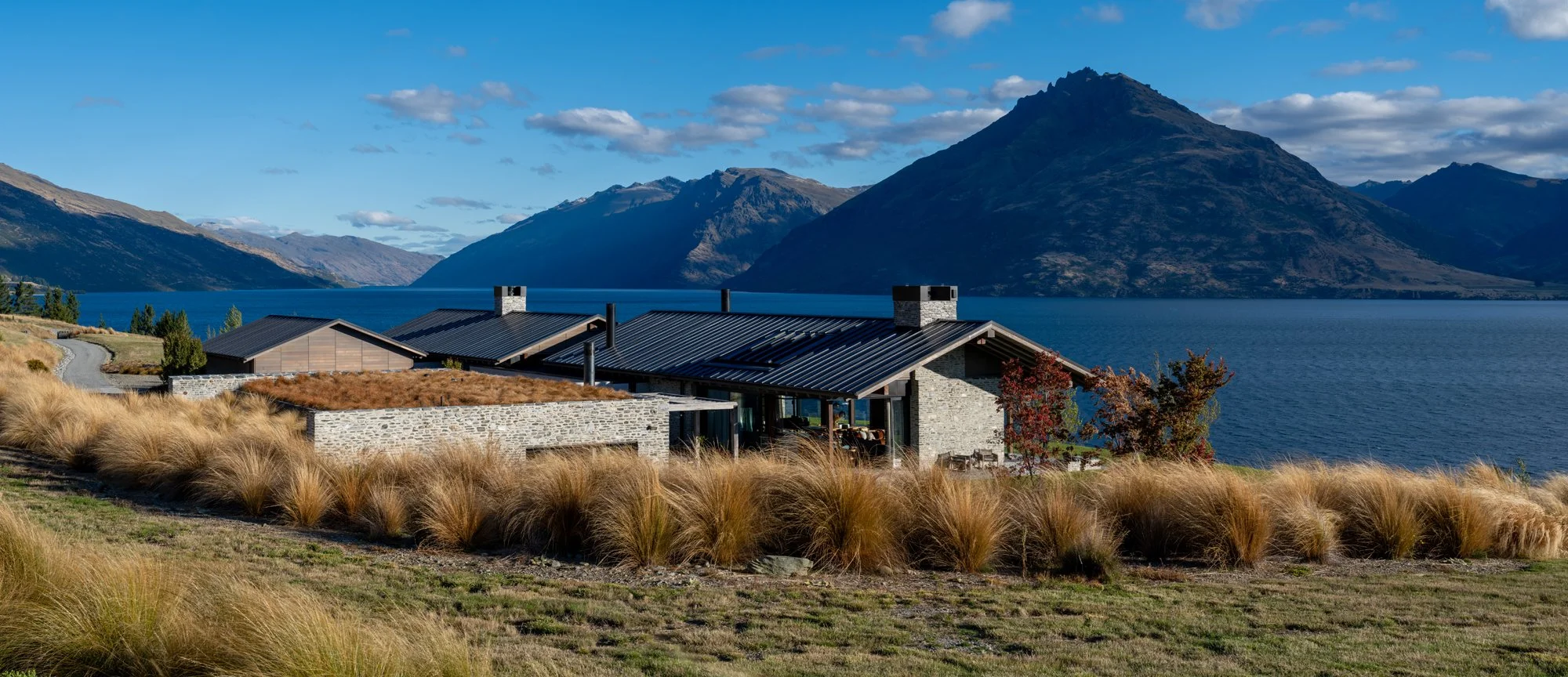
Nestled amongst tussock grass, Homestead Bay House overlooks Lake Wakatipu. Image by Simon Devitt
Inspired by the rugged landscape of Homestead Bay, Ambitec SuaveStone polished plaster in Stone White brings a natural texture and depth to the interior of Homestead Bay House. Its subtle soft grey tonal variation with clay and flecks of aggregate, echoes the surrounding schist and stone.
Used throughout, the finish provides continuity across the interior while complementing the home's palette of natural stone and timber. The result is a cohesive, grounded aesthetic that feels intrinsically linked to the Queenstown landscape.
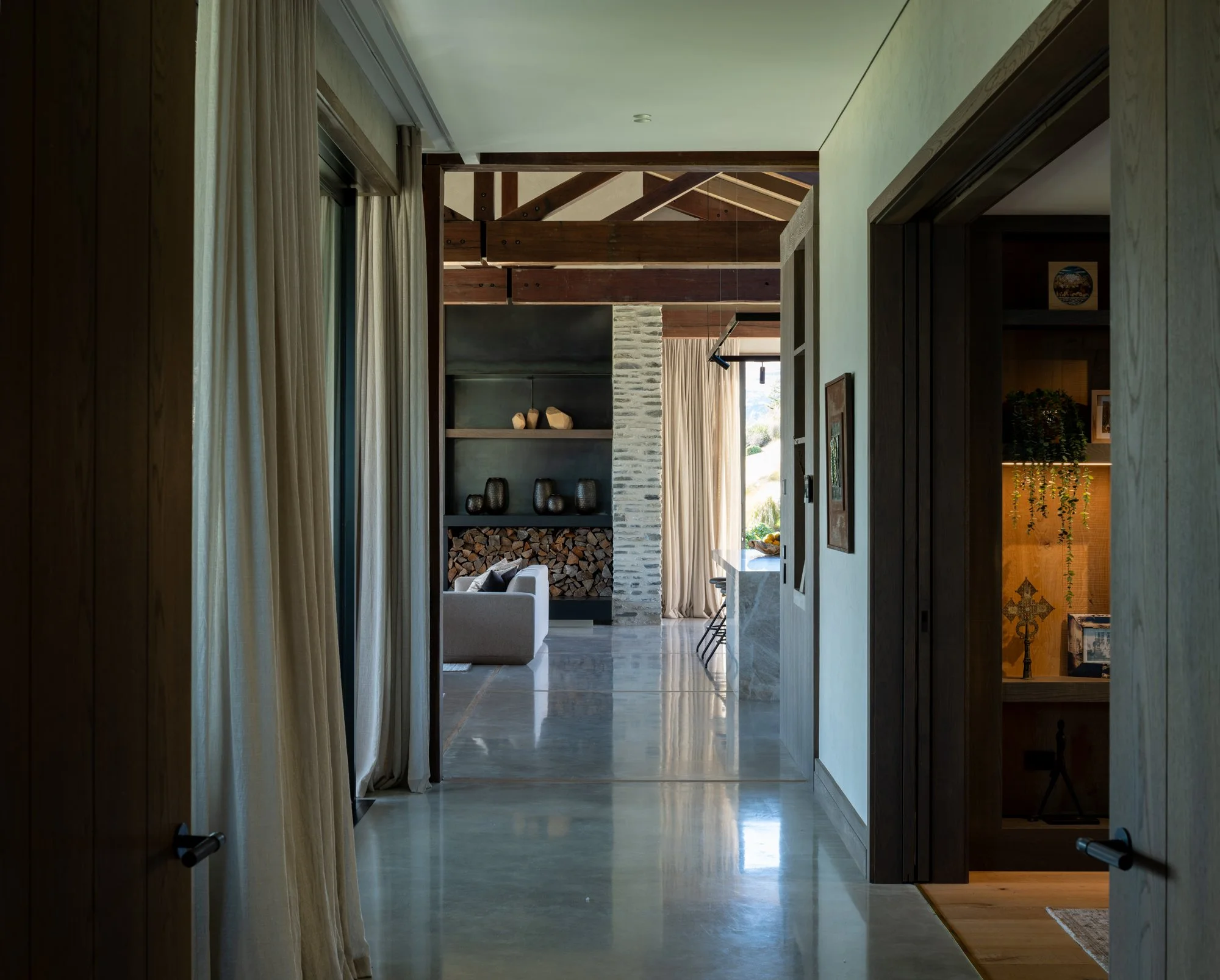
Homestead Bay House - Image by Simon Devitt.
Mooney Residence – Arrowtown
Studio Studio
Rendered stone sits in harmony with timber and Ambitec polished plaster. Image by Studio Studio
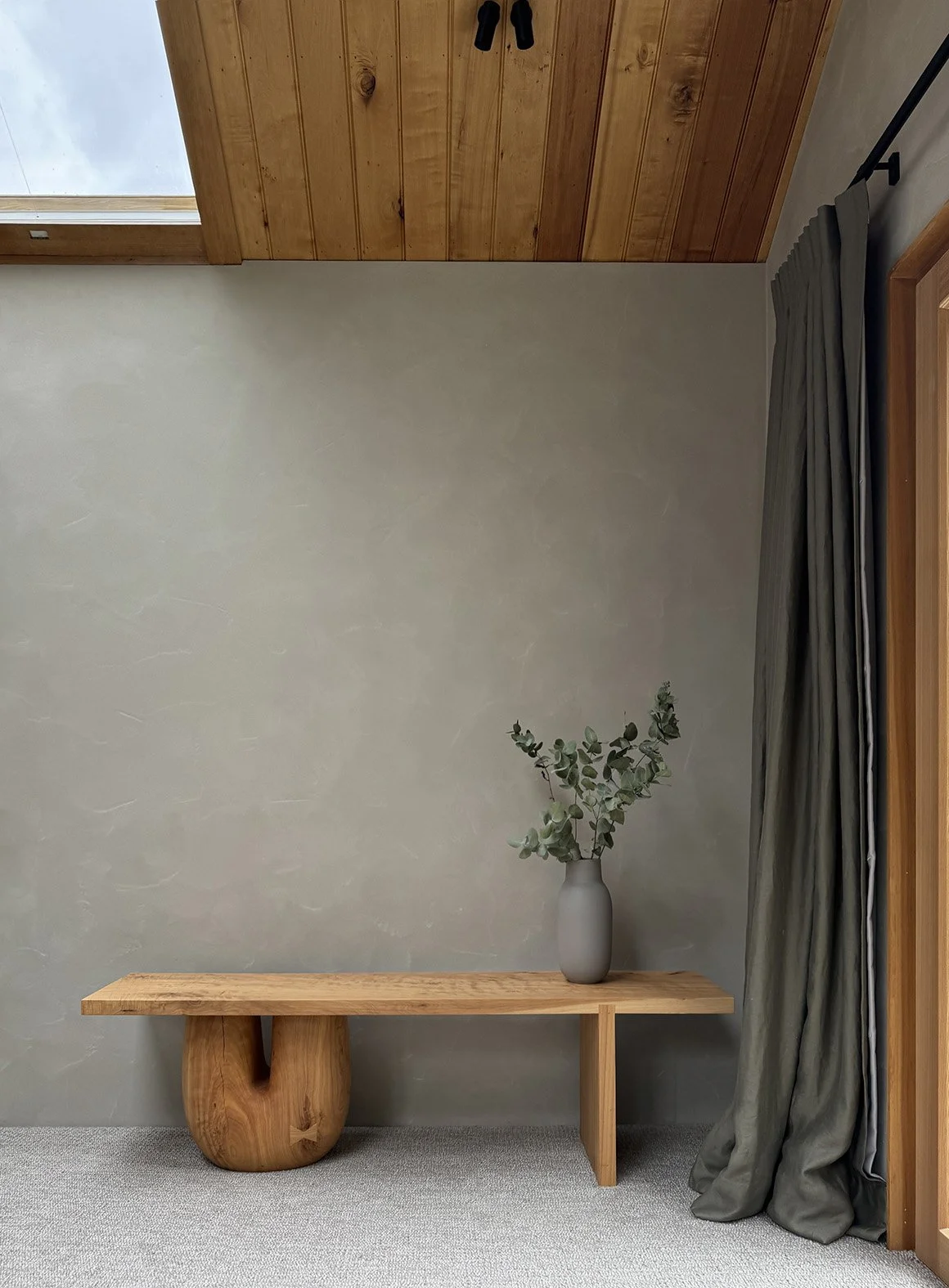
Suave in Gravel White. Image by Studio Studio
In the Wakatipu basin, an area highly characterised by luxury lifestyle properties, and historic stone walls, is Mooney Road. Approached by the architects as a “regeneration, not just a renovation” of a heritage building, one of the key details to the response was to address the ‘material tension’. Use of Ambitec Suave eased the contrast of the heavy rendered stone walls.
Suave in Illusion brings light into the common areas, while the soft brown-grey of Gravel White adds a sense of warmth and calm to the master bedroom.
Polished plaster walls, and natural materials work together to soften the home’s robust bones, allowing the old and new to sit more naturally alongside one another.
Explore more Queenstown Lakes homes
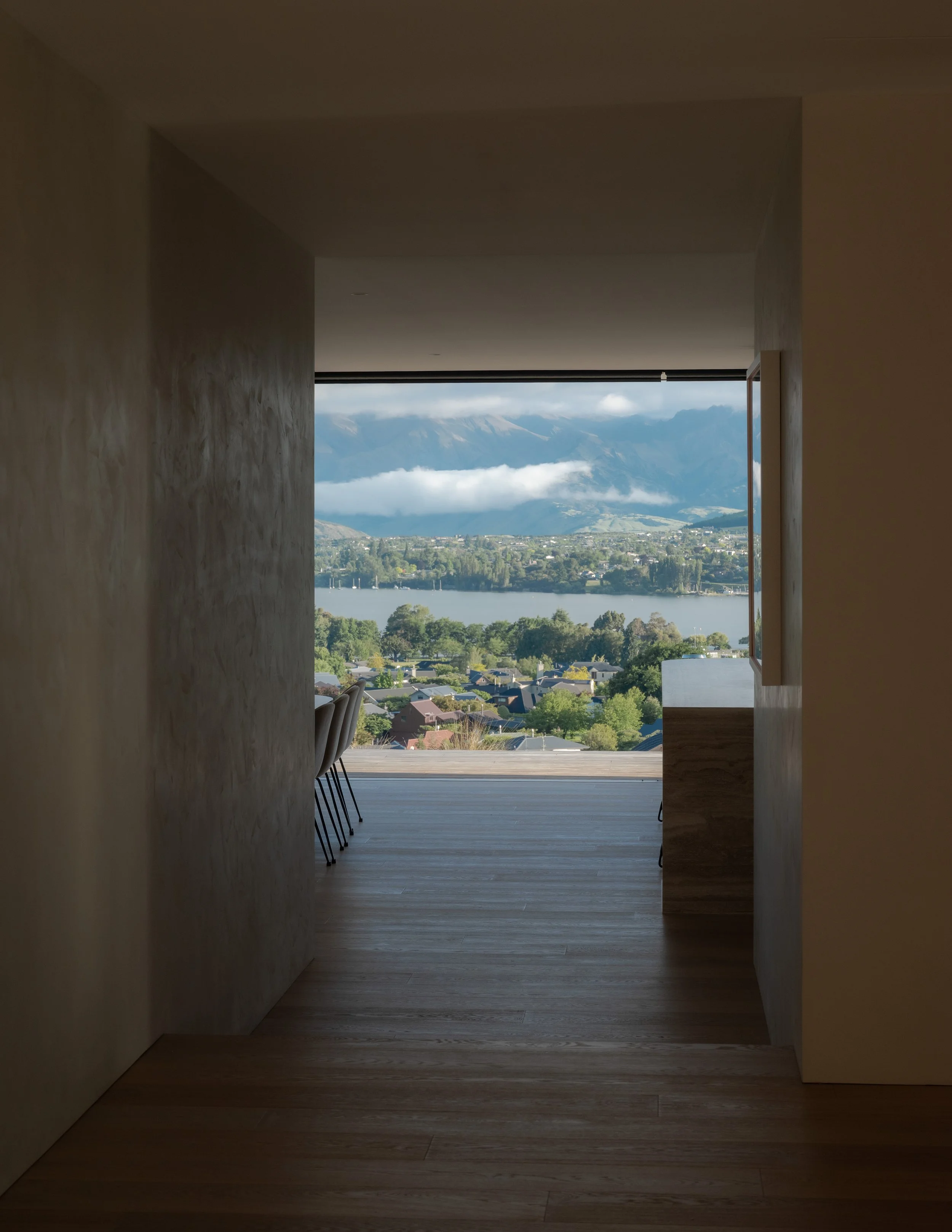
Lake Ridge House. Image by Biddi Rowley
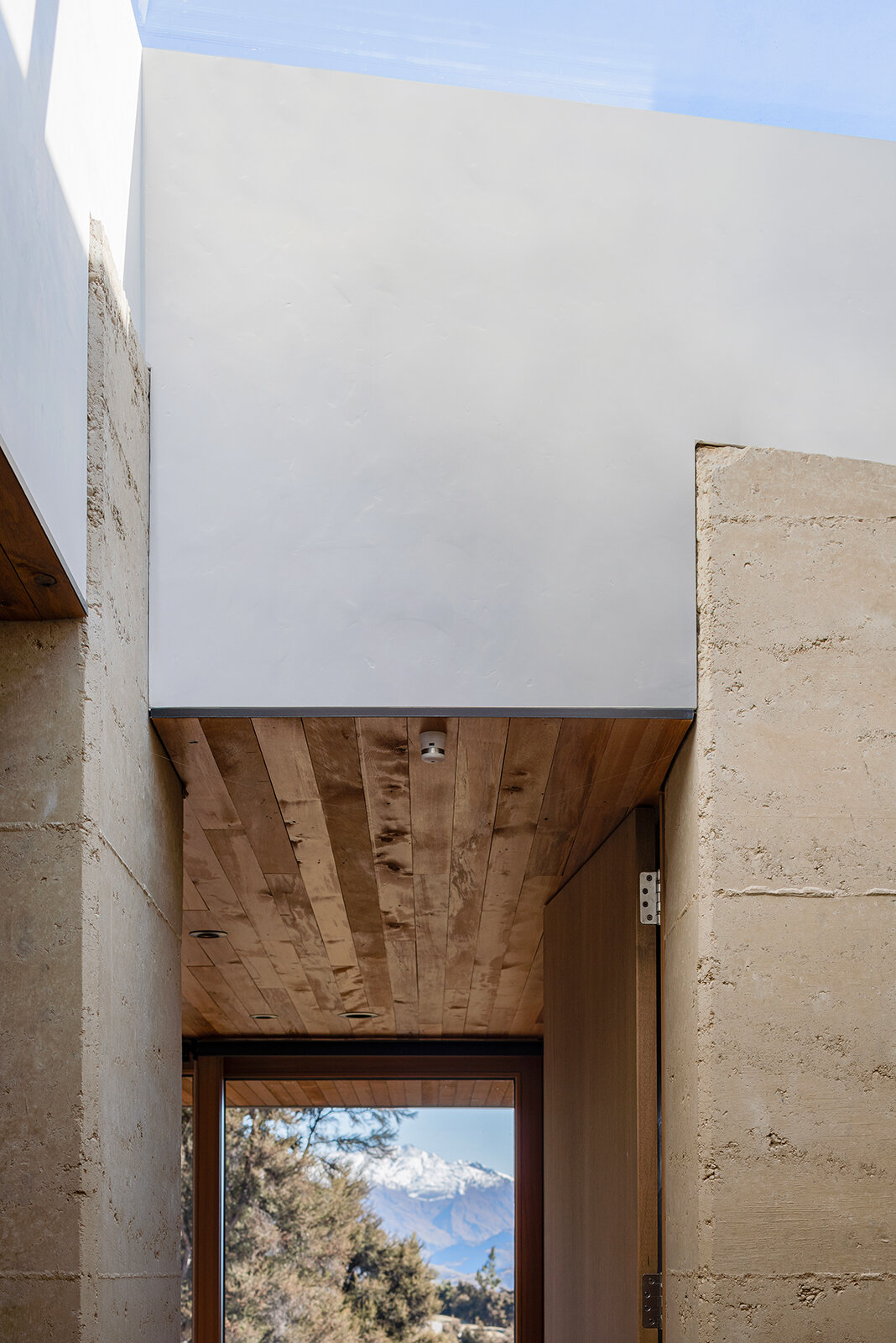
Kānuka Bay House. Image by Mickey Ross
Local materials and Ambitec polished plaster
Concrete
Concrete brings weight, strength and simplicity to a building. Its smooth or textured surfaces can be echoed in the subtle variation of polished plaster, while differences in tone and finish create interest between the two materials.
Stone
Stone brings the textures and colours of the landscape into a building, from the subtle variation of weathered schist to the sharper edges and reflective surfaces of more highly finished stone. Ambitec polished plaster can complement these qualities through its own tonal variation and tactile surface, providing either a quiet contrast or a continuation of the stone's natural palette.
Timber
Timber introduces warmth and a sense of organic detail, whether through polished flooring, exposed beams, or the grain and texture of more rustic finishes. Against these surfaces, polished plaster can provide a softer, more restrained plane, allowing the natural variation of the timber to remain prominent.
Across the Queenstown Lakes, these materials take on different forms, shaped by the architecture, the setting and the preferences of the people who live in these homes. Ambitec polished plaster offers another surface to work with: one that can sit quietly alongside stone, timber and concrete, or introduce a contrasting texture and tone.
The result is not simply a connection between materials, but a relationship between the interior and its setting. Through colour, texture and the way light moves across a surface, polished plaster can help carry something of the surrounding landscape into the spaces we inhabit.